May 31, 2026 · dough
Caputo 00 Breadmaker Dough
Cooked on our Ninja Woodfire
Silky, elastic Neapolitan-style dough made in a bread machine with Caputo 00 flour, Caputo Lievito yeast, and Baleine fine sea salt. Cold-ferment for 24–48 hours for the best crust.
- Prep
- 15 min
- Cook
- 1 hr 30 min
- Total
- 49 hr 45 min
- Rest / Ferment
- 48 hr
- Servings
- 3–4 dough balls (about 210–280 g each)
Disclosure: This post contains affiliate links. If you click and buy something, we may earn a small commission at no extra cost to you.
Three ingredients. One machine. The rest is time.
This is our everyday dough — the one behind the pizzas on our Ninja. It’s light and extensible, with a thin, pliable center and a rim that puffs and browns on the stone. Here’s why we cold-ferment it. Caputo 00 is the classic Neapolitan flour, and there’s a reason. It’s milled finer than anything you’ll find at a grocery store, the gluten develops beautifully in a bread machine, and the result stretches without fighting you.
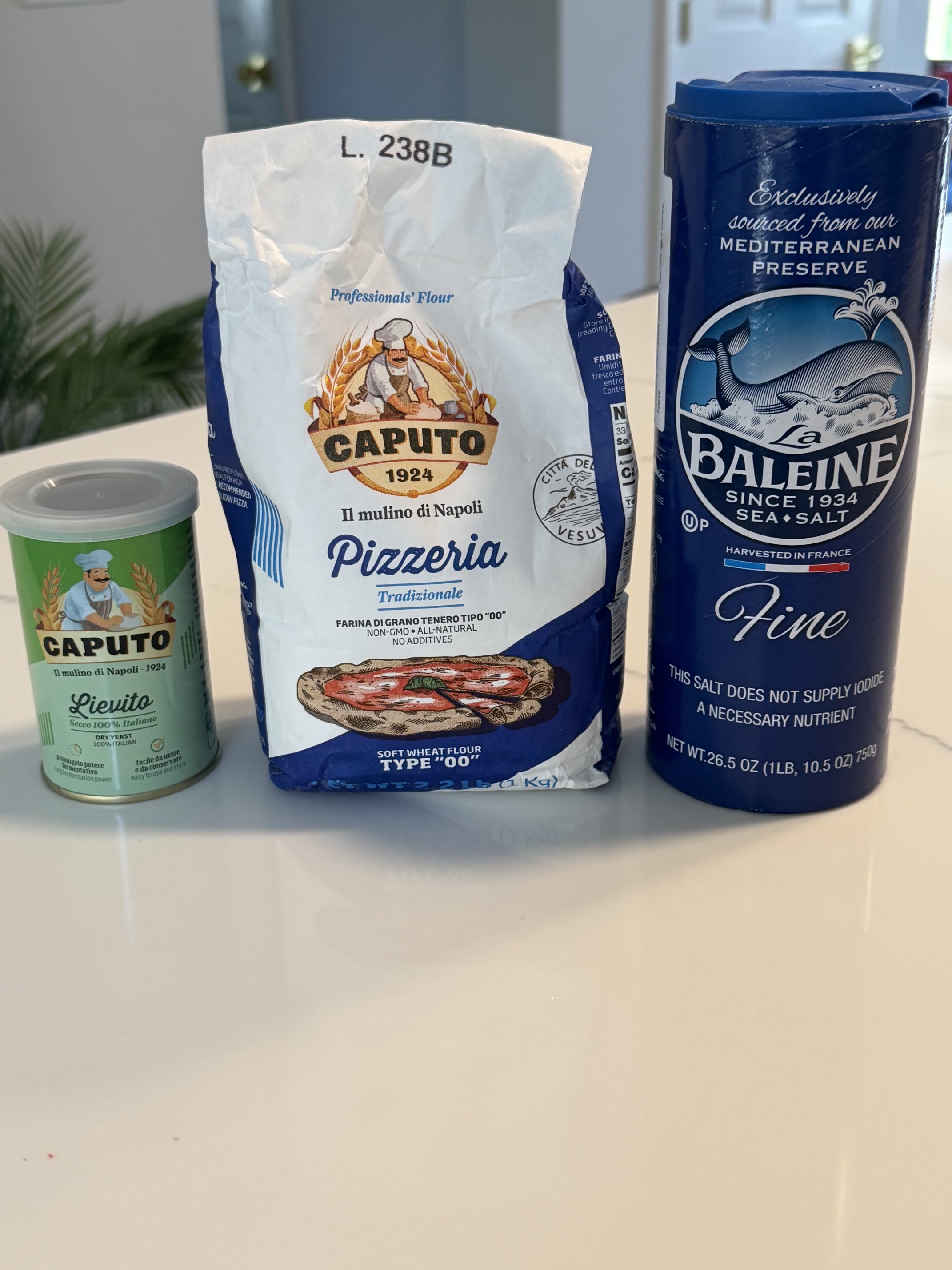
The three ingredients in the photo — Antimo Caputo 00 Flour, Caputo Lievito dry yeast, and Baleine fine sea salt — are the whole recipe. Use a kitchen scale. It’s not optional with 00 flour.
Hydration: 65%. This is on the lower end of Neapolitan doughs — intentionally. Bread machines work best with slightly stiffer doughs. You can nudge it to 68% (340g water) once you’ve made it a few times and know how your machine handles it.
Notes
On water temperature. We use cool tap water, not cold from the fridge, not warm. Bread machines generate heat during kneading — warm water can push the dough temperature too high and overactivate the yeast before fermentation starts.
On yeast. 1.5g is not a typo. It’s about a quarter of what most American recipes call for. Less yeast + more time = better flavor. Trust the cold ferment.
On the olive oil. It’s optional and traditional Neapolitan dough skips it entirely. We add it when we want a softer crumb. Leave it out when we want maximum char on the rim.
On yield. 500 g of flour makes about 840 g of dough. We usually go with three 10-inch pies at about 280 g each — good coverage, easy to manage on the peel. Four balls of about 210 g each make smaller pies.
Making a different number of balls? The dough calculator scales this recipe and tells you when to mix.
On the machine. We mix ours in a Cuisinart CBK-110 on the Dough cycle, which handles the kneading and first rise. Pull the dough out, ball it, and cold-ferment 24–48 hours.
See Also
Ingredients
Instructions
-
Load the machine in the right order
Add ingredients in the order your breadmaker recommends — typically liquids first. We do: water, olive oil, flour, salt, yeast. Keep the yeast away from the salt until the machine starts mixing.
-
Run the dough cycle
Select the dough cycle (not the bread cycle). Most machines run 1.5–2 hours, with kneading followed by a first rise. Don't rush it.
-
Check at 10 minutes
Lift the lid during the first kneading. The dough should form a smooth, slightly tacky ball that clears the sides. Too wet and sticky: add flour a teaspoon at a time. Too stiff and cracking: add water a teaspoon at a time. Once it's right, close the lid and leave it alone.
-
Divide and ball
When the cycle finishes, turn the dough onto a lightly floured surface. Divide into 3 or 4 equal pieces — about 280 g each for three 10-inch pies, or about 210 g each for four smaller ones. Shape each into a tight ball: fold the edges to the bottom, then roll under your palm until the surface is smooth and taut.
-
Cold ferment. Don't skip this.
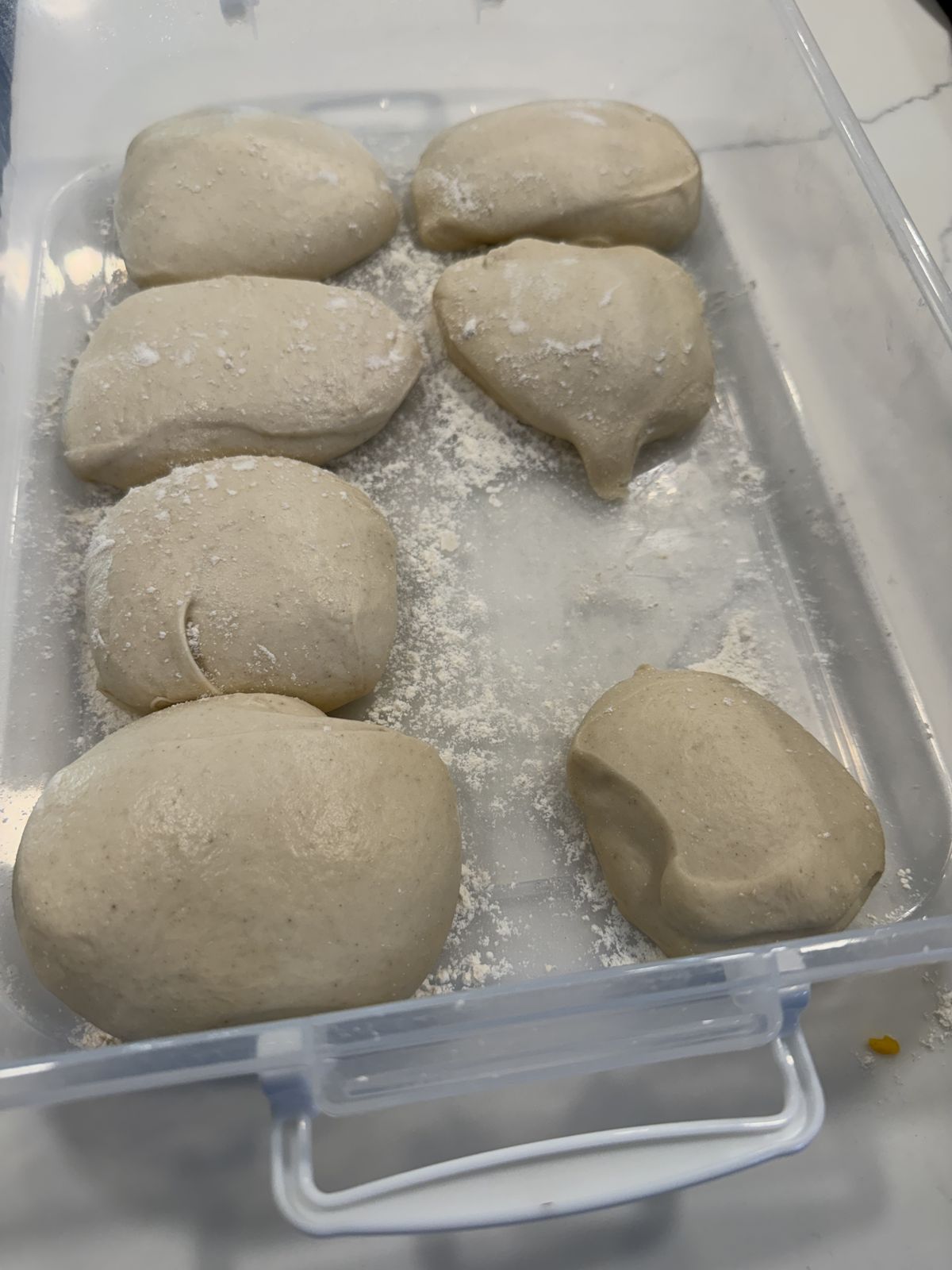
Place the balls in a proofing tray dusted with flour, leaving room between them, cover it, and refrigerate for 24–48 hours. The flavor development that happens here is the whole point. A same-day dough made with 00 flour tastes fine. A 48-hour cold-fermented one tastes completely different.
-
Temper before baking
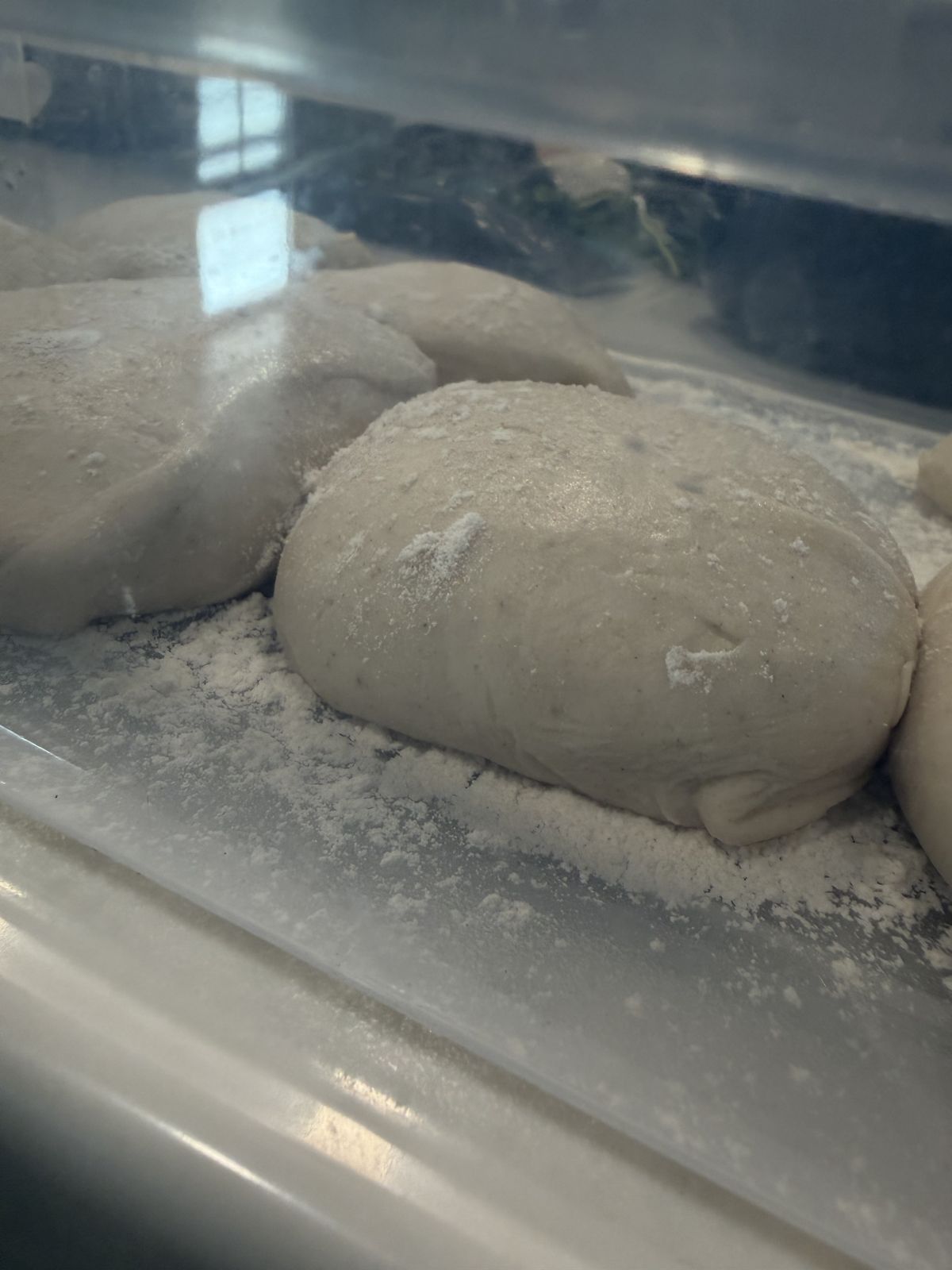
Pull the dough from the fridge 1–2 hours before you plan to bake. Cold dough tears. Room-temperature dough stretches. Give it the time it needs.
-
Shape and bake
Stretch gently by hand — no rolling pin. Start in the center and work toward the edges, leaving the rim alone. Dock it if you're worried about bubbling. Preheat your oven fully before the first pie goes in — on our Ninja, that's about 20 minutes at 550°F for everyday pies.
Gear we used
Some links below are affiliate links — we may earn a small commission at no cost to you.
-
Ninja Woodfire Outdoor Oven