June 1, 2026 · white-pizza
Pesto, Fresh Mozzarella & Basil
Cooked on our Ninja Woodfire
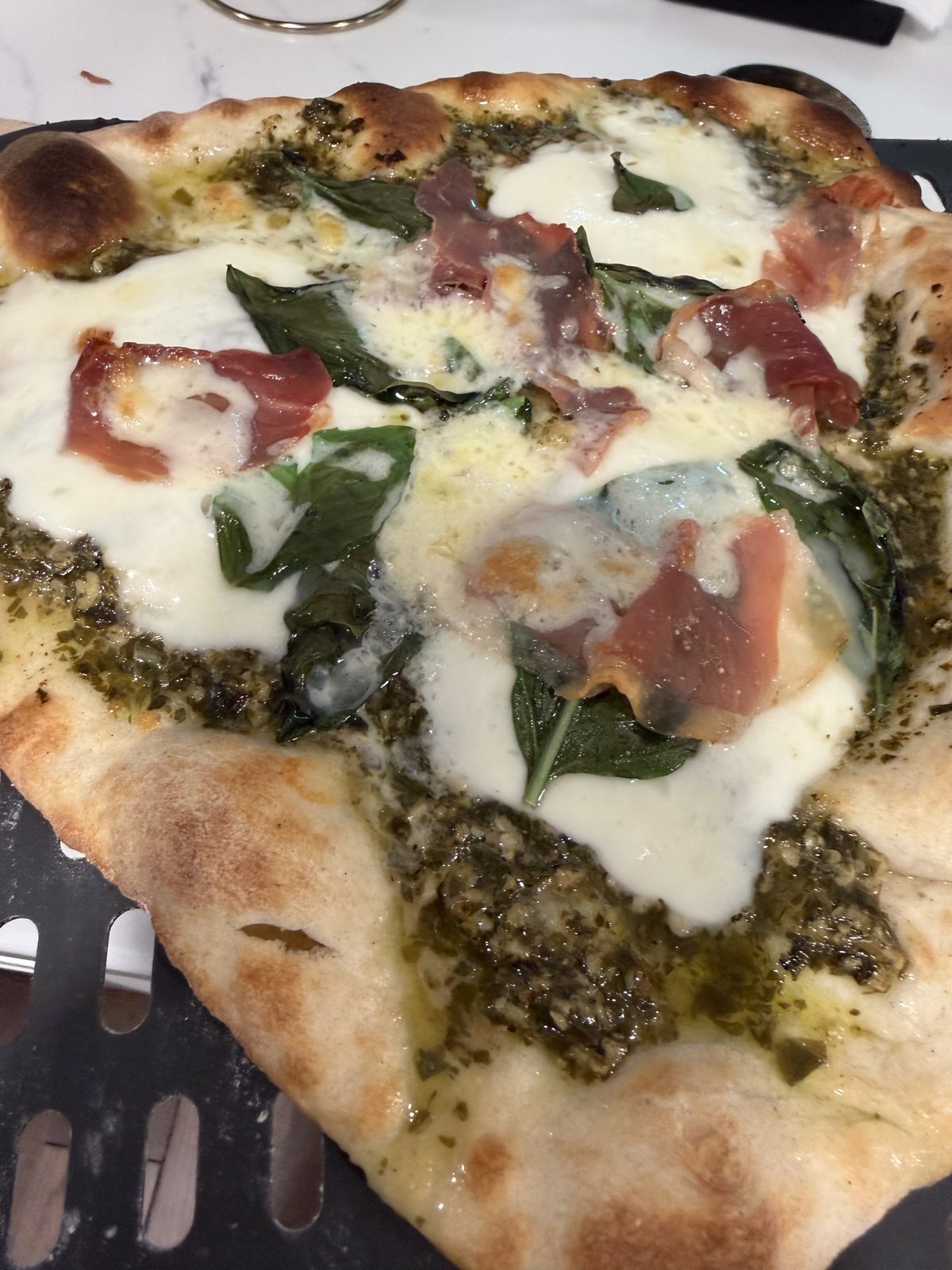
The summer pie. Pesto made the day you use it, fresh mozzarella, basil that goes on after the bake. Simple on purpose.
- Prep
- 15 min
- Cook
- 7 min
- Total
- 22 min
- Servings
- One 10–12 inch pizza
Some pies are about complexity. This one is about doing a small number of things well.
Pesto made the day you use it. Fresh mozzarella torn by hand, not shredded. Basil that goes on after the stone, not before, so it stays green and alive. The crust does most of the work — pesto is already rich, already seasoned, and if the dough underneath is good, you don’t need to pile anything on top.
We make this one more than any other in June and July, when basil is cheap and the backyard smells like it. It’s the fastest pie in our rotation, start to finish, and the one guests ask about most.
Notes
On the mozzarella: Fresh mozzarella matters here. Low-moisture mozzarella will work on a tomato sauce pie but on pesto it’s too rubbery and contributes nothing. Look for it in water at a deli counter, or the fresh-packed balls at a decent grocery store. Dry it on a paper towel for 10 minutes before tearing — excess moisture is the enemy of a crisp crust.
On the basil timing: Basil goes on after the bake, always. On a hot stone it turns black in under a minute. The contrast between the hot melted cheese and the bright cold basil laid on top is half of what makes this pie taste right.
On pesto from a jar: It will work. The pie won’t be the same. Fresh pesto has a brightness that oxidized, pasteurized jar pesto can’t match. If you’re going to make pesto pizza, make the pesto.
On the crust: The cold-ferment dough is the right call here — the long ferment gives you a slightly sour note that cuts the richness of the pesto and cheese. A same-day dough will work but the flavor balance shifts.
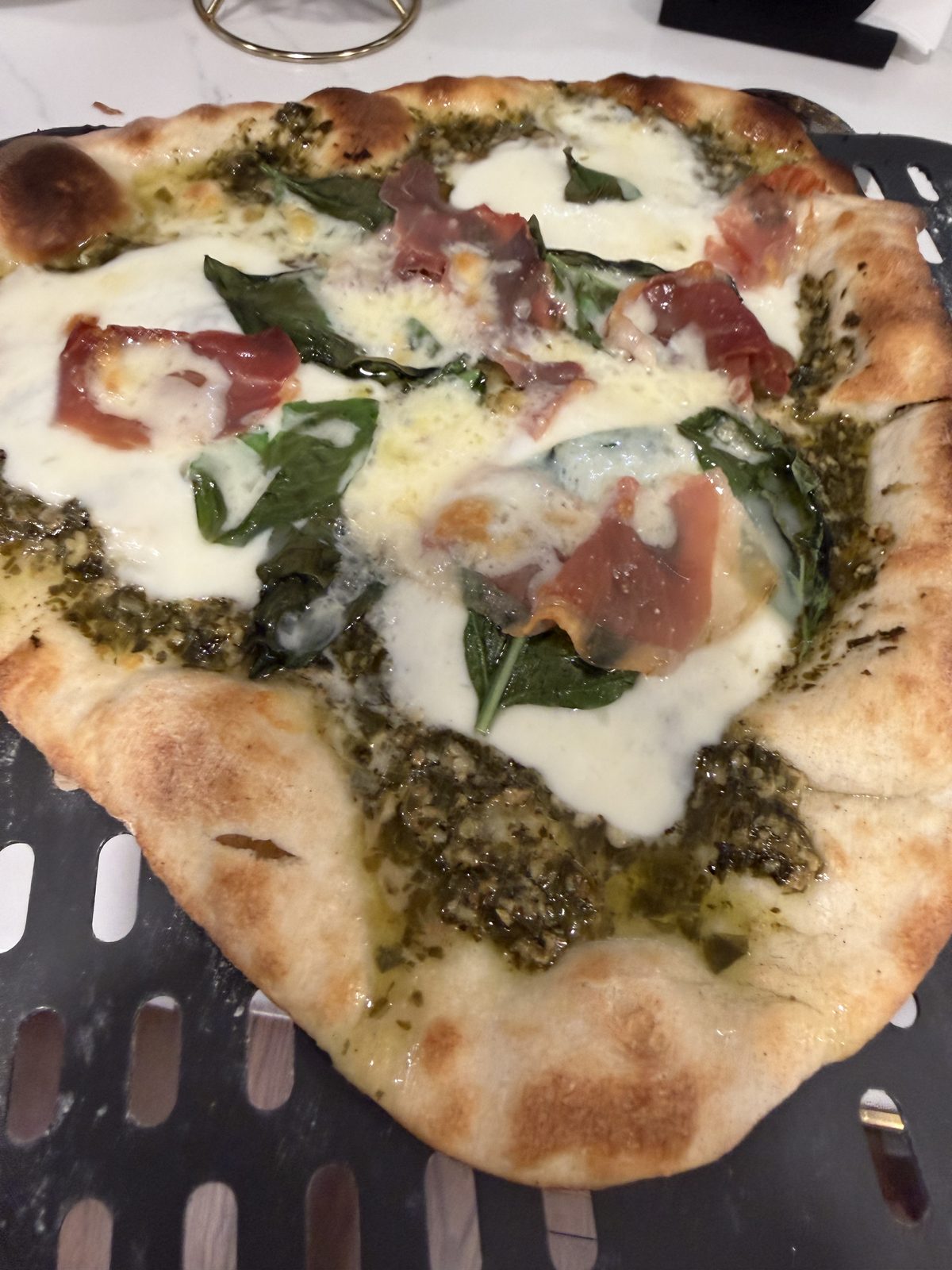
Prosciutto variation: Lay 2–3 thin slices of prosciutto over the top right after the basil goes on, while the pie is still hot enough to soften the fat. Don’t bake the prosciutto — it turns leathery fast on a hot stone. This is the version we make when the pie needs to carry a meal instead of open one.
Related
Ingredients
Instructions
-
Make the pesto
Combine basil, garlic, and pine nuts in a food processor. Pulse until roughly chopped. Add the Parmigiano and pulse again. With the machine running, stream in the olive oil. Season with salt and lemon juice. Taste — it should be bright, garlicky, and salty enough to season the whole pie. If making ahead, press plastic wrap directly against the surface to prevent browning. It'll hold for a day in the fridge, but fresh is noticeably better.
-
Stretch and oil
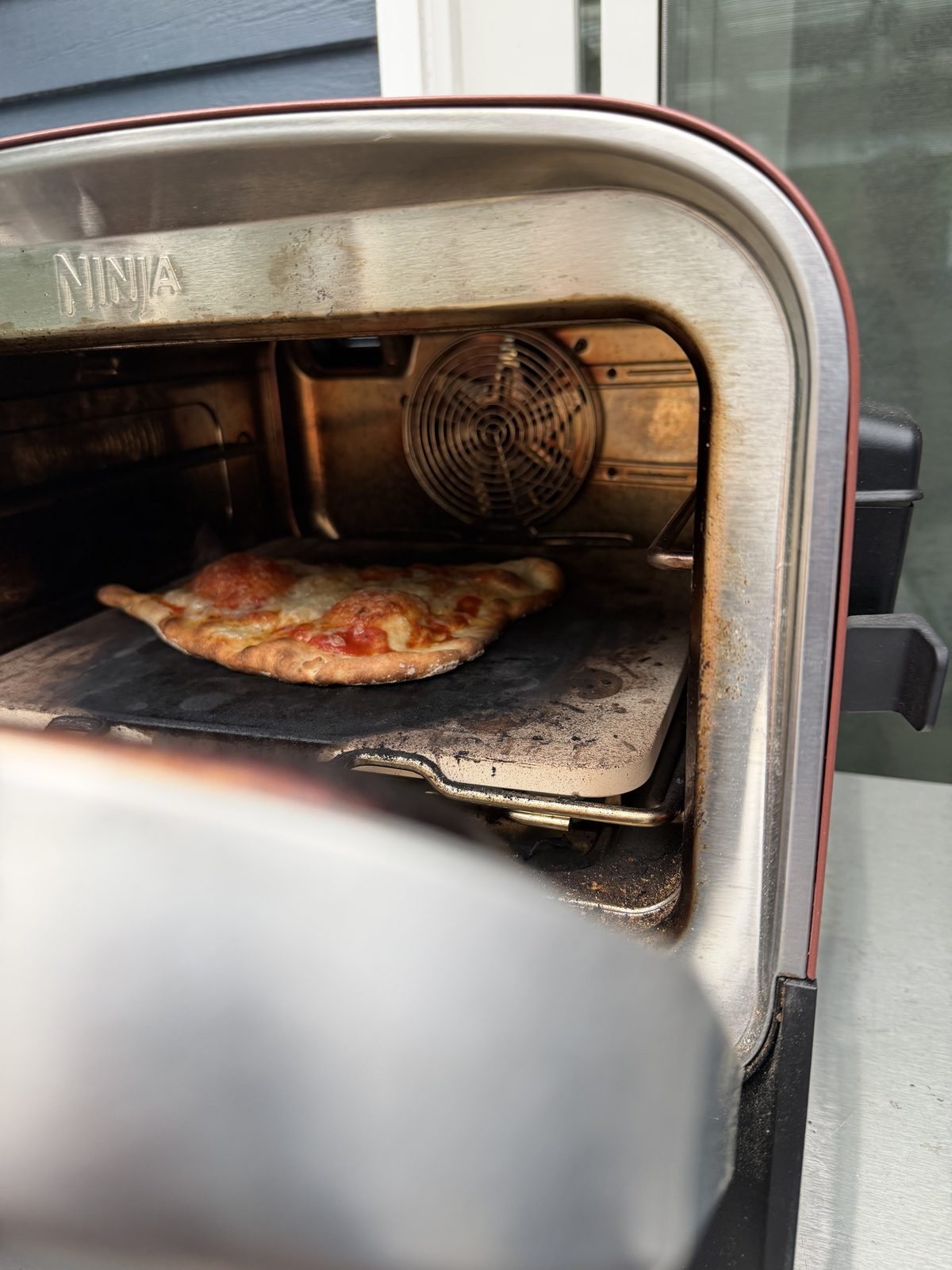
Stretch your dough ball and lay it on a well-floured peel. Work quickly. Brush the surface lightly with oil.
-
Preheat and par-bake
Preheat the Ninja Woodfire to 550°F for about 20 minutes and confirm the stone reads around 540°F with an infrared thermometer. Launch the oiled dough bare and par-bake it for about 1 minute 30 seconds.
-
Top the shell
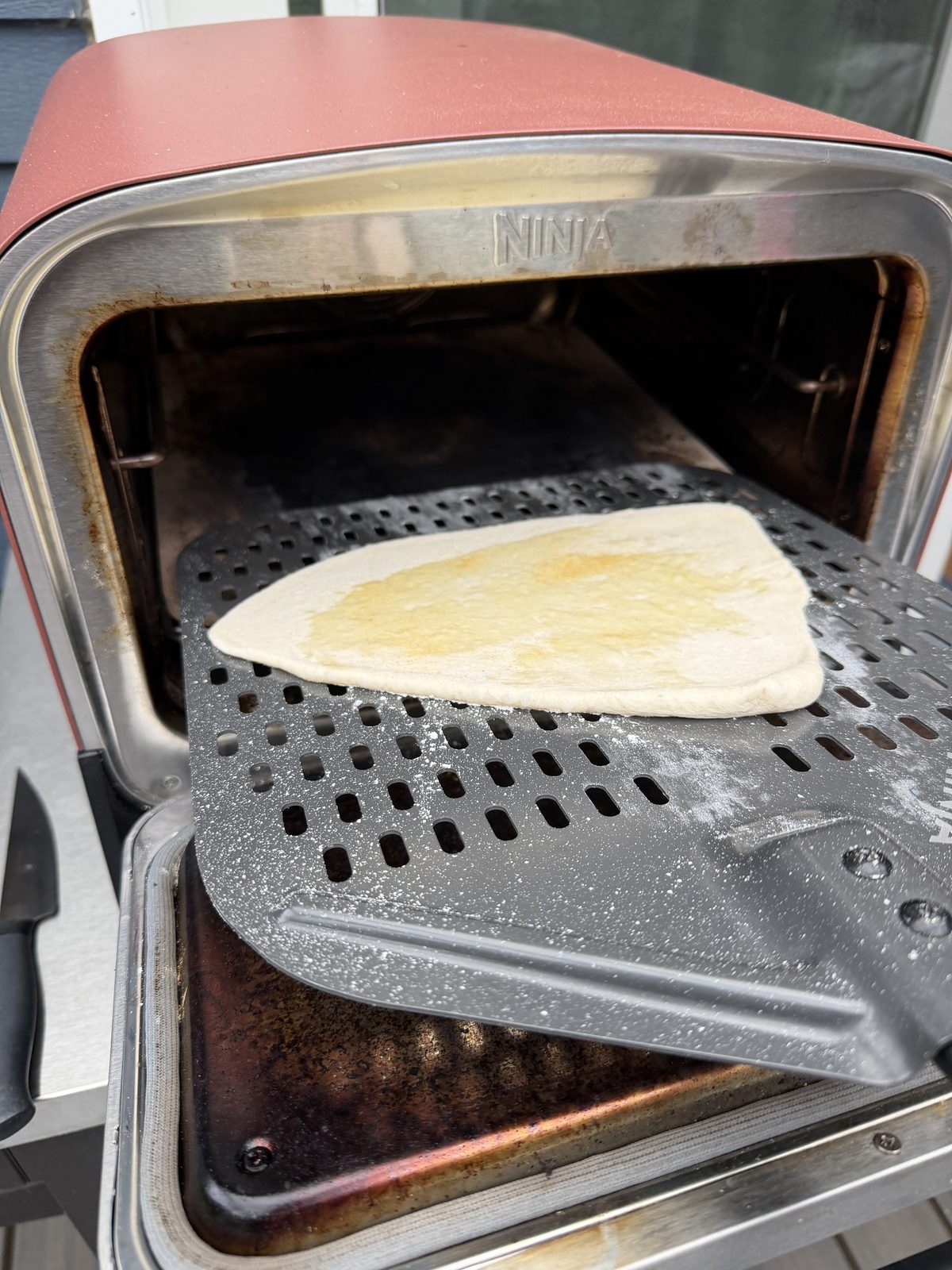
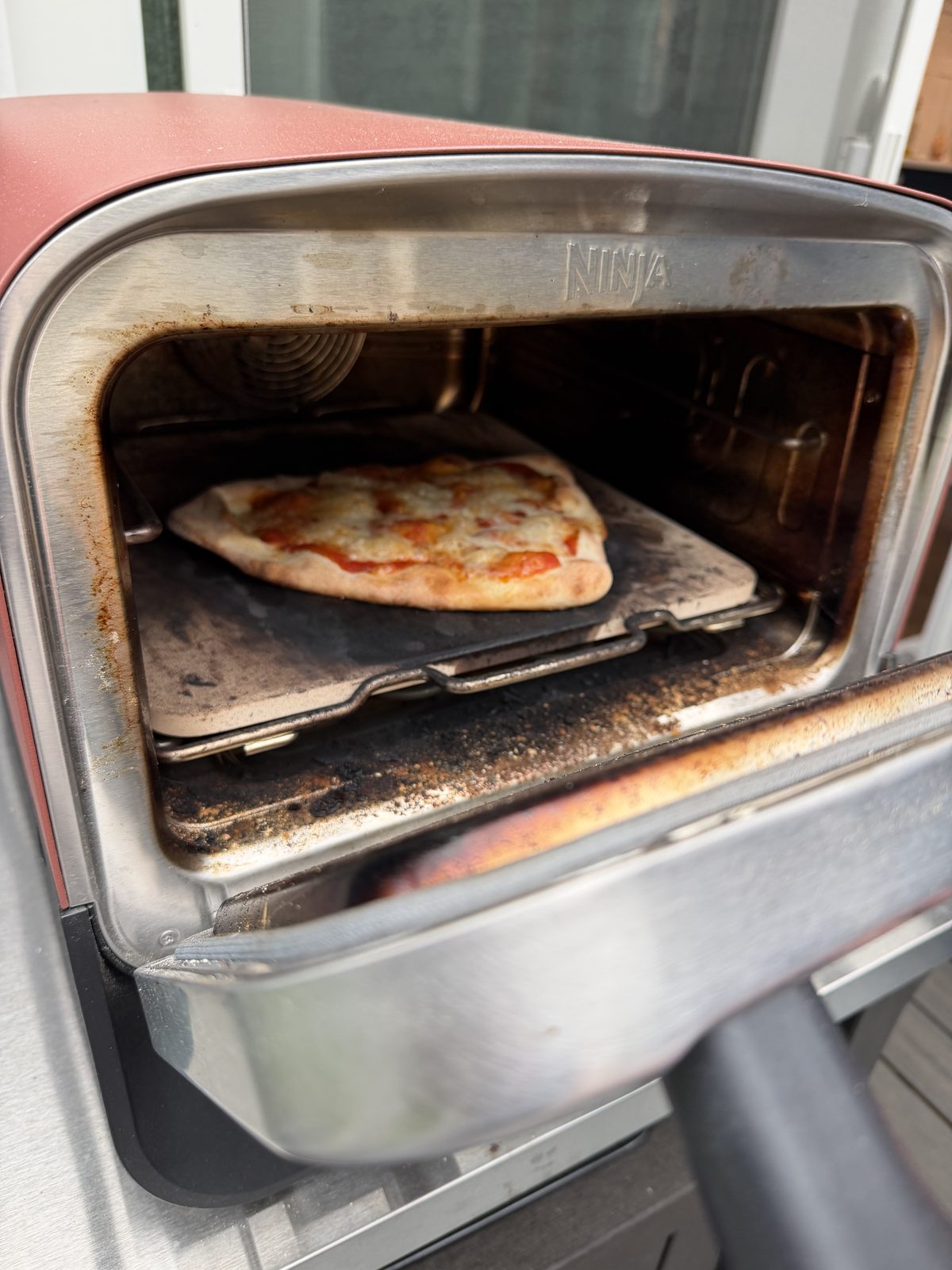
Pull the shell back onto the peel. Spread pesto across the surface, leaving a ¾-inch border. Don't overthink this — 4–5 tablespoons is about right. Too much and the pie gets heavy and soggy; too little and the crust is dry. Distribute the torn mozzarella pieces evenly. Leave some gaps — the mozzarella will spread as it melts, and you want it to pool slightly in places rather than form a solid layer. Season with a small pinch of flaky salt and a light drizzle of olive oil over the cheese.
-
Bake
Slide it back onto the stone and bake for about 5 minutes without turning. You're looking for a golden crust and mozzarella that's fully melted with some color at the edges. Don't walk it past this — pesto can turn bitter if it sits on a hot stone too long.
-
Finish
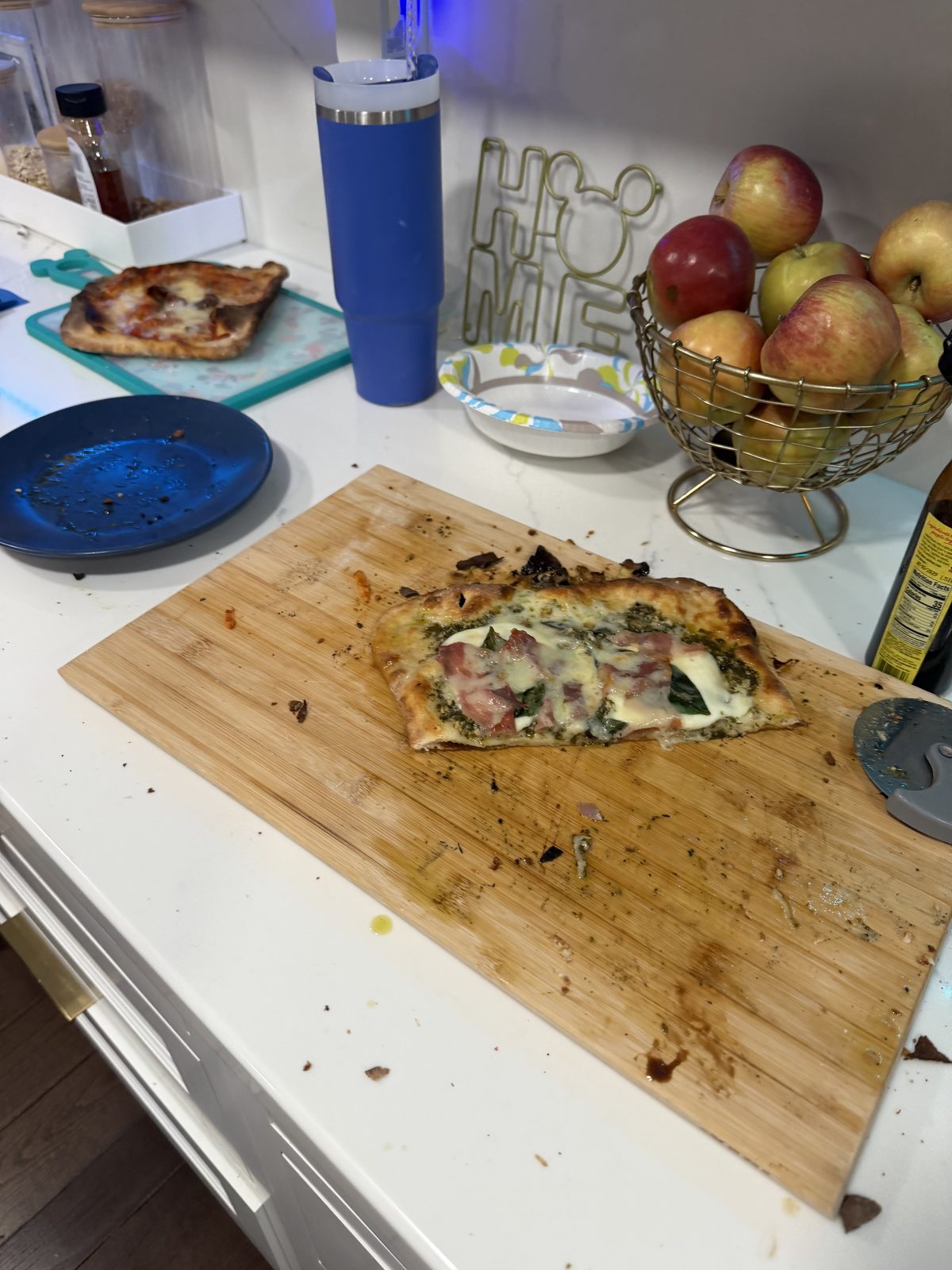
Slide off the peel and let sit 60 seconds — fresh mozzarella is essentially liquid at this point and needs a moment. Lay the fresh basil leaves across the surface. A thread of good olive oil. Nothing else. Cut and serve immediately.
Gear we used
Some links below are affiliate links — we may earn a small commission at no cost to you.
-
Ninja Woodfire Outdoor Oven