March 11, 2026
Why We Cold-Ferment Our Pizza Dough (and How Long to Let It Go)
Same-day dough tastes like warm flour. A day or two in the fridge changes everything. Here's the Caputo dough we actually use, how long we ferment it, and how it bakes on our Ninja Woodfire.
- recipe
- dough
- cold-ferment
- caputo
- ninja-woodfire
Disclosure: This post contains affiliate links. If you click and buy something, we may earn a small commission at no extra cost to you.
Last updated: September 2026
Mix dough at noon, stretch it at six, and you’ll find out at seven why same-day pizza tastes like warm flour and fights you all the way onto the peel.
The fix isn’t a fancier technique. It’s time. Mix the dough a day or two ahead, let it sit in the fridge, and almost everything downstream gets easier.
If you just want the recipe, it’s here: our Caputo 00 breadmaker dough, with exact weights and steps. This post is the why.
What a cold ferment actually does
Slowing fermentation down in the fridge does three things same-day dough can’t:
- Flavor. The yeast works slowly and enzymes break down starches, so the same handful of ingredients tastes deeper and a little sweeter.
- Extensibility. The gluten relaxes, so the dough opens without snapping back. That matters most when you’re stretching on the deck and the oven is already hot.
- Schedule. The dough waits for you. Mix it a day or two before pizza night and there’s nothing to rush when people show up.
The dough we use
Our everyday dough is short and simple, and it’s mixed in a bread machine:
- Caputo Pizzeria 00 flour — 500 g
- Cool water — 325 g (65% hydration)
- Baleine fine sea salt — 13 g
- Caputo Lievito dry yeast — 1.5 g
- Olive oil — optional
The Cuisinart CBK-110 handles the mixing and first rise on its Dough cycle. When it finishes, we divide the dough into three or four balls, set them in a floured proofing tray, cover it, and put it in the fridge. The full recipe has every step.
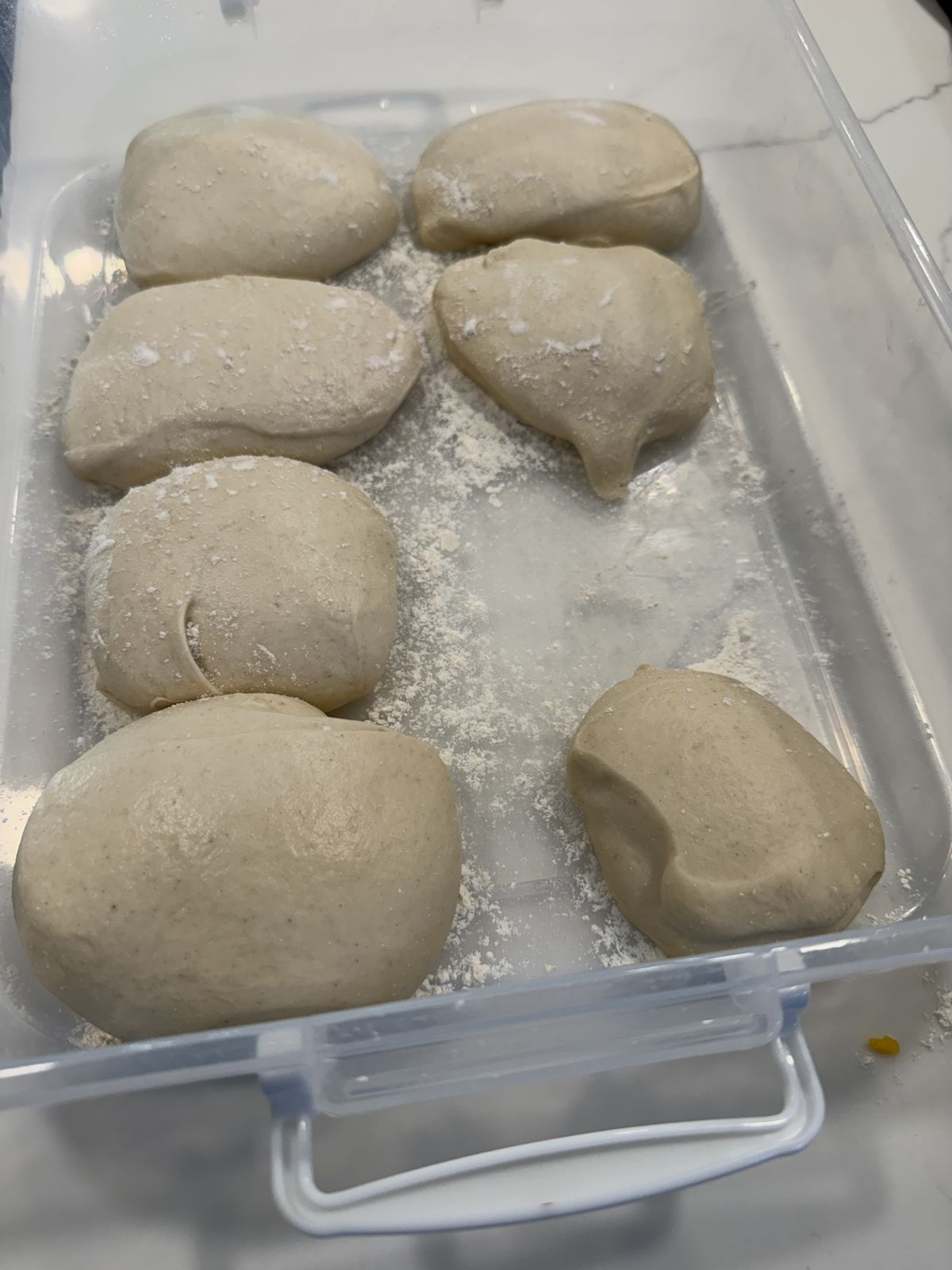
The small amount of yeast is deliberate. With 1.5 g per 500 g of flour, the dough rises slowly enough to spend a day or two in the fridge without overproofing.
Weigh everything. Baker’s percentages only work by weight, and a digital kitchen scale is the one tool we’d call non-negotiable.
How long to ferment
- 24 hours: a real improvement over same-day dough.
- 48 hours: where the flavor really comes through.
- Longer: you can push it to 72 hours and the dough still handles well, but that’s not what we do. We go 24–48 hours; past about 48 you’re mostly buying convenience, not a lot more flavor.
Whatever you choose, pull the dough out of the fridge 1–2 hours before you bake. Cold dough tears; room-temperature dough stretches. If you’re not sure it’s ready, here’s how to tell.
Cold-ferment dough calculator
Pick your pizza and when you want to eat. You'll get ingredient weights, yeast scaled to your fridge and ferment time, and a schedule for when to mix.
| Flour | |
|---|---|
| Water | |
| Salt | |
| Oil | |
| Sugar | |
| Yeast | |
| Total dough |
Your schedule
How it bakes on our Ninja Woodfire
We preheat the Ninja to 550°F, which takes about 20 minutes, and check the stone with an infrared thermometer. It usually reads around 540°F. We brush the stretched dough with oil and par-bake it for about 1 minute 30 seconds, then top it and bake for about 5 minutes without turning it.
The result is an evenly golden crust with some blistering on the edge. It won’t leopard like a 60-second Neapolitan from a 900°F oven, and it doesn’t need to. The cold-fermented dough is what gives it flavor and a chew that same-day dough never has.
One tip for humid days
If the dough feels sticky and hard to handle on a humid day, hold back 2–3% of the water the next time you mix. In grams, that’s 10–15 g less water per 500 g of flour.
Where to use it
- Chicken Bacon Ranch
- Pesto, fresh mozzarella & basil
- Neapolitan margherita
- Before you stretch: how to tell when your dough is actually ready to open
- Choosing yeast: what yeast to buy for pizza dough